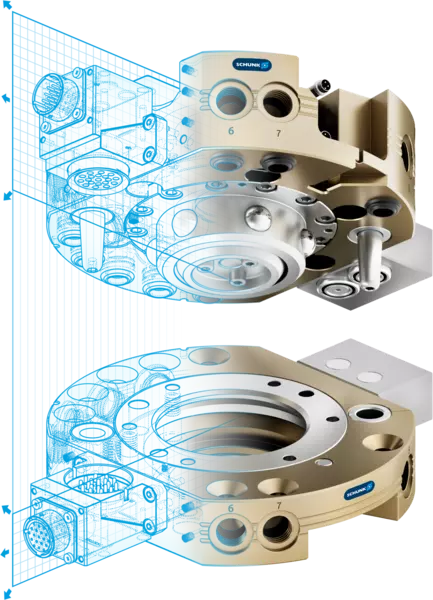
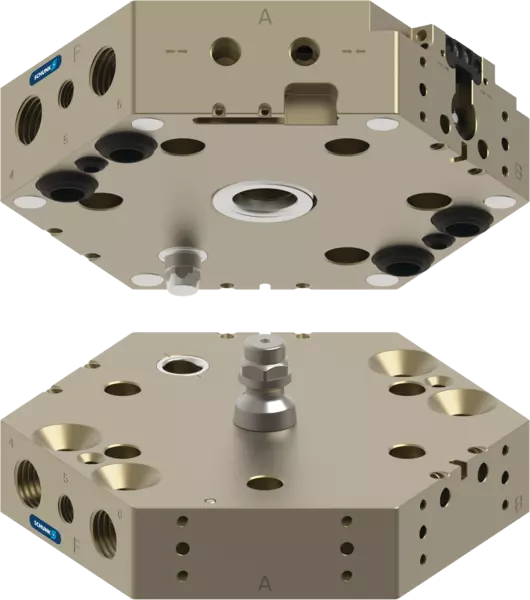
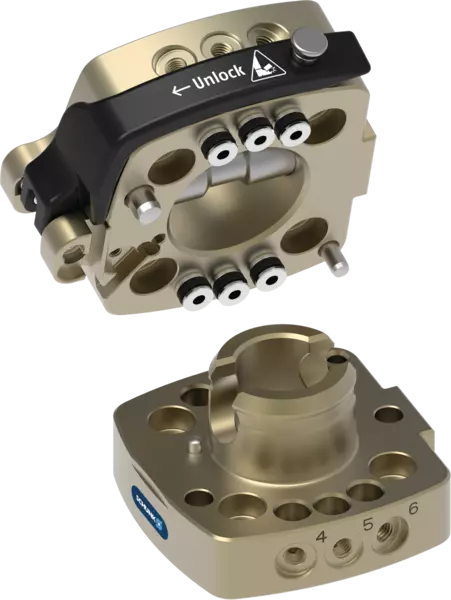
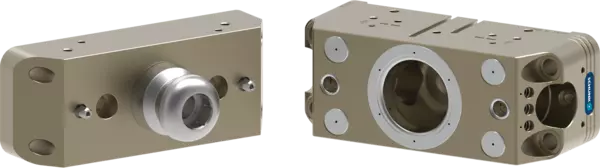
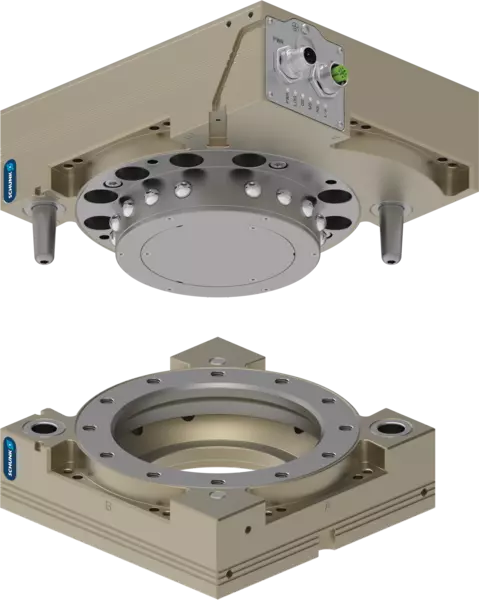
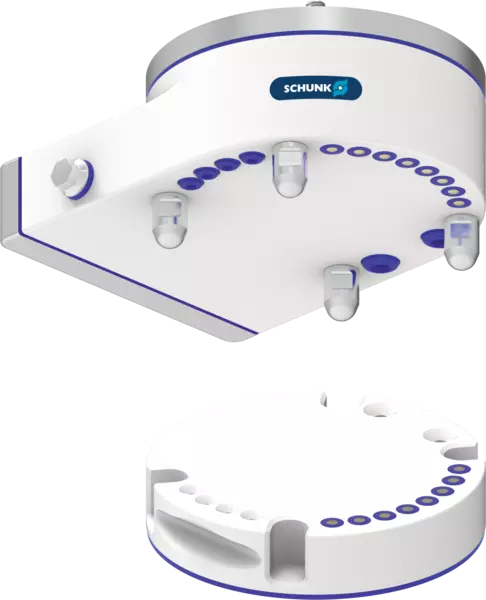
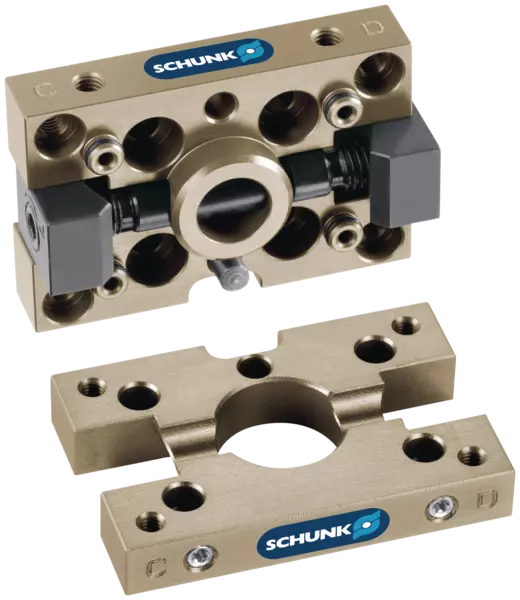
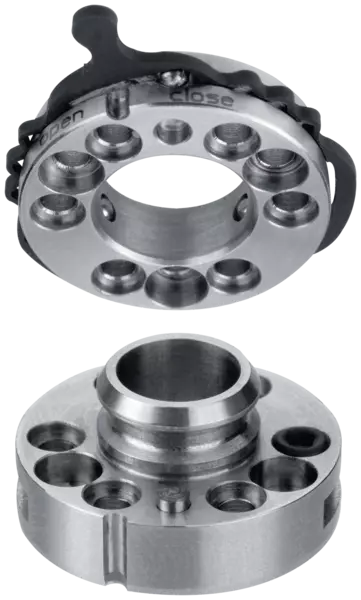
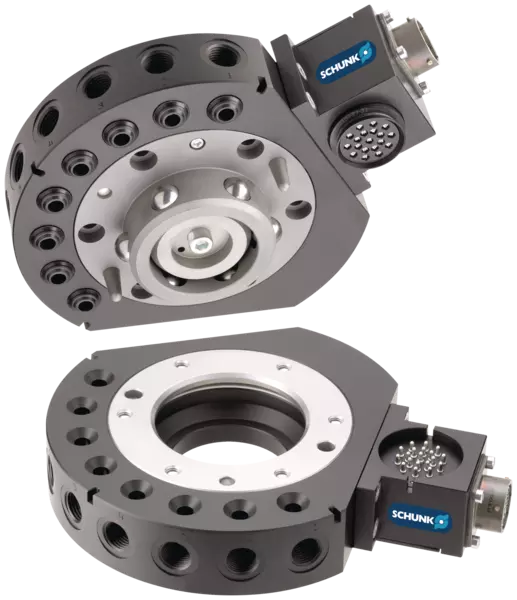
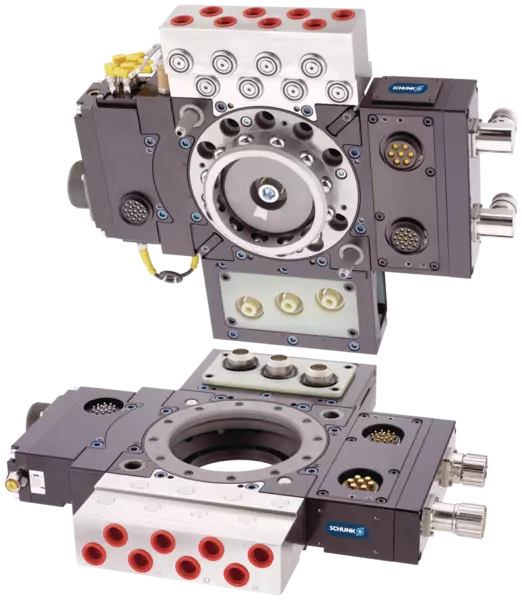
Using SCHUNK tool changers on robot front ends increases your application's versatility, efficiency, cycle time, and process reliability. Automatic and manual tool changers enable grippers, tools and other effectors to be changed quickly. In the field of automation, SCHUNK also offers the a broad portfolio of components for robot applications, from handling small components to heavy loads.
Many Robot PLUS products are prepared as standard to be bolted directly to a robot's ISO 9409-1 flange.
Example: ISO 9409-1-125-6-M10 ISO 9409-1 describes the standard 125 corresponds to the bolt circle diameter 6- M10: 6 x M10 screws pre-installed in the unit
This value describes the force with which the interchangeable head pulls the interchangeable adapter. Depending on the system, this value applies to different distances between the interchangeable head and the interchangeable adapter, see below:
CPS: Value applies when the distance between the interchangeable head and the interchangeable adapter is 0.5 mm
CPB: Applies when the distance between the interchangeable head and the interchangeable adapter is 0 mm.
A tool change system is comprised of two components. The component which attaches to the robot is the robot side. The component which attaches to the tooling is the tool side.
The handling weight is the suggested payload for a tool changer system. The proper selection of a tool changer model must however consider the force and moment loading on a tool changer.
Pneumatically actuated tool changer with self-retaining function in the event of a loss of compressed air, the integrated piston spring ensures that gap formation is minimized.
Pneumatically actuated tool changer with self-retaining function in the event of a loss of compressed air, the integrated piston spring ensures that gap formation is minimized.
Electrically actuated tool changer with self-retaining function in the event of electrical power failure and an integrated sensor system for monitoring locking and tool presence.